
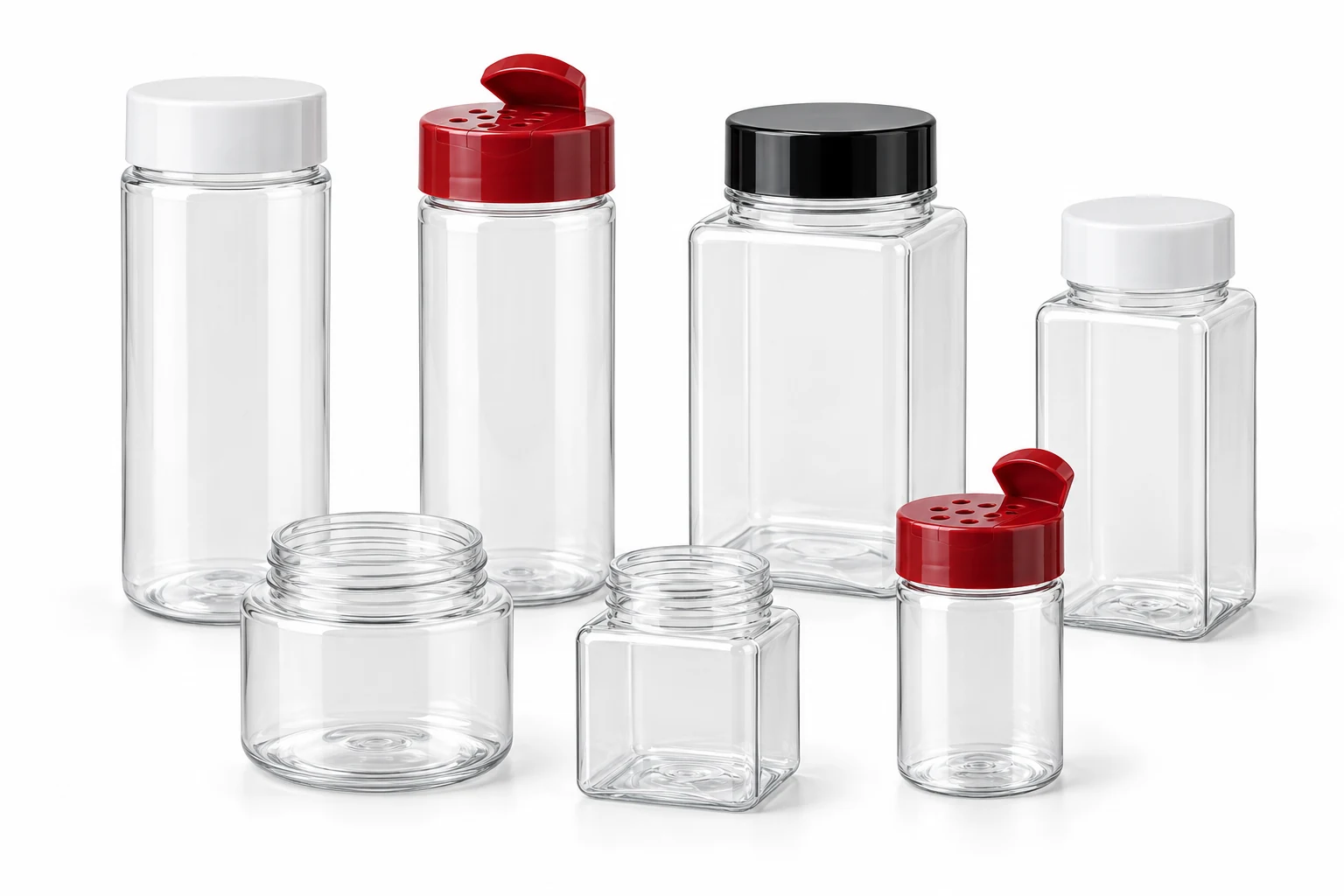
For bulk custom spice bottles, confirm the container, closure, seal, intended use and repeat-order controls together. Start from an available bottle format where suitable; discuss new tooling only when the product brief needs it. FUKANG manufactures PET and HDPE packaging in China and supports project-specific container selection and customization discussions.
Start with the spice, not just the bottle
Brands, spice processors, contract packers and packaging distributors often arrive with different needs. A retail seasoning range may need coordinated shelf presentation; a food-service buyer may prioritize handling and repeat supply. Tell your custom plastic bottle manufacturer which requirement matters most before comparing prices.
Define whether the product is a fine powder, coarse granule, dried leaf or blend. Specify the target fill weight, filling method, intended shelf life and destination market. This guide concerns dry spice packaging; sauces, liquids and hot-fill applications need a separate review.
Do not treat millilitres and grams as interchangeable. Bottle capacity describes volume, while achievable fill weight depends on the spice’s bulk density, settling behaviour and headspace. Test the actual product in a sample instead of approving a seasoning jar from a nominal capacity alone.
Consider clear PET food jars where product visibility is part of the brief, then assess the finished pack’s protection needs. Neither clarity nor the phrase “food-grade” replaces application-specific evidence.
10 checks before choosing a spice bottle manufacturer in China
A credible manufacturer comparison should produce answers you can verify. Use the same specification and questions with each candidate; a low unit price is difficult to compare when closures, tooling, testing or packing differ.
| Check | What the buyer should confirm |
|---|---|
| 01 / Product fit | Bottle capacity, fill weight, product form, headspace and filling method. |
| 02 / Material | Exact polymer, colour and material grade proposed for the application. |
| 03 / Bottle drawing | Dimensions, neck finish and agreed tolerances—not just a photograph. |
| 04 / Closure system | Cap thread, dispensing openings, liner and opening experience. |
| 05 / Existing or new tooling | Available format suitability, mould ownership, costs and maintenance responsibilities. |
| 06 / Samples | Which sample represents the proposed material and complete production pack. |
| 07 / Food-contact evidence | Documents relevant to the material, intended conditions and destination market. |
| 08 / Quality and traceability | Inspection plan, defect agreement and batch-to-order records. |
| 09 / Commercial scope | MOQ, price basis, packing, trade terms and any separate development costs. |
| 10 / Repeat supply | Approved reference sample, change control and replenishment planning. |
Existing tooling can be a practical starting point for OEM spice packaging when the geometry already fits. A new custom mould may be justified by a distinctive shape or production requirement, but it introduces development decisions. Ask what can be changed without new tooling and what requires a new design.
Choose the bottle, shaker cap and seal as one system
For custom seasoning bottles, the closure controls how the product is used. Fine powders, coarse particles and dried herbs do not flow identically. Compare opening size, pouring control and the user’s ability to close the pack again. Discuss screw, shaker and flip-top directions with the supplier, then confirm the options available for the selected neck.
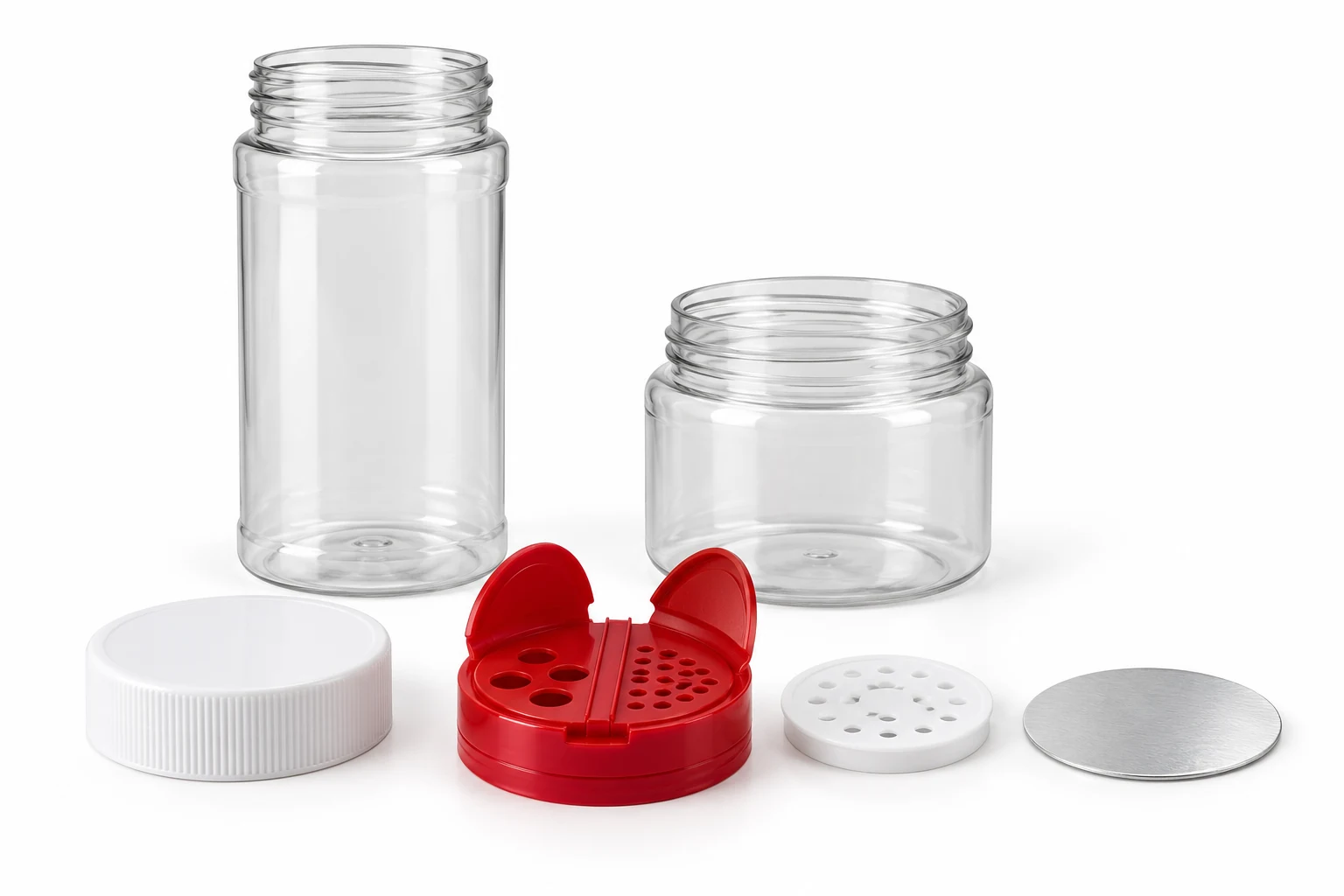
A cap that looks right is not necessarily a compatible cap. Confirm the bottle drawing and closure specification together. Review application torque, cap fit and any liner or induction-seal requirements with your filling operation. Tamper evidence, moisture protection and leakage performance depend on the complete construction and validation conditions.
Use bottle caps, closures and seals as part of the packaging brief, not as an afterthought. If a printed label or sleeve is planned, define its application area and compatibility separately; the samples shown here are empty, unlabeled packaging concepts.
Build a repeatable specification before placing the bulk order
Ask how the factory links the agreed material, mould or bottle model, inspection results and dispatch records to your order. Batch traceability is a record system—not a claim established by a photograph. Your quality team should agree the records needed for incoming checks, complaints and repeat supply.
Before bulk approval, review representative samples with your real product and filling operation. Set acceptance criteria for dimensions, appearance and closure performance, and agree which changes require approval. A retained reference sample helps a distributor or multi-site brand compare future deliveries consistently.
- 01Define
Product, market, capacity and order plan
- 02Sample
Container, cap and seal combination
- 03Validate
Filling checks, documents and acceptance criteria
- 04Approve
Final specification and repeat-order controls
Explore FUKANG manufacturing and quality and documentation support alongside the sample discussion. Ask for current project-relevant information rather than assuming every certificate covers every bottle.
Bring your specification into the conversation.
Discuss Your Custom Spice Bottle ProjectWhat to send for a useful bulk quotation
A clear quotation request reduces avoidable back-and-forth. Send the intended contents, target fill weight, preferred capacity and shape, closure direction, destination country and estimated quantities per SKU. Include a drawing or reference photo if one exists, plus the required sample date and planned purchase schedule.
- Pack: bottle material, colour, capacity, neck, cap and seal requirements.
- Order: trial quantity, bulk quantity, SKU mix, repeat-order expectation and packing needs.
- Evidence: food-contact conditions, required documents and your approval checks.
- Commercial basis: tooling scope, sample arrangements, delivery location and trade terms.
MOQ and lead time are not universal figures. They vary with the bottle, closure, colour, tooling and production plan. Ask FUKANG for the current quotation for your defined combination rather than relying on a generic website number.
Looking for a custom plastic packaging bottle manufacturer for a seasoning range? Chester can help frame the FUKANG product and customization conversation. Contact [email protected] or use the Alibaba store to discuss samples and a bulk quotation.
Frequently asked questions
Can FUKANG help with custom spice bottles and seasoning jars?
FUKANG manufactures PET and HDPE bottles and jars and supports custom packaging discussions. Share your dry spice, capacity, closure, market and quantity requirements so the team can confirm suitable formats and current project options.
Do custom plastic spice bottles always need a new mould?
No. An available format may fit the brief. A new mould should be discussed when shape, dimensions or another technical requirement cannot be achieved with an existing format. Confirm tooling costs, ownership and sample approvals before proceeding.
Can I specify a spice bottle by fill weight alone?
Provide fill weight, but also evaluate capacity with the actual spice. Bulk density, settling and headspace affect the bottle volume required. A container that works for one seasoning may not hold the same weight of another.
What is the MOQ for wholesale spice jars?
Request a project-specific MOQ. Bottle format, material, colour, closure, customization and SKU mix can affect the order requirement. The website does not promise a single MOQ for all combinations.
Are shaker caps interchangeable between bottles?
Do not assume so. Neck finish, cap thread, liner and application requirements need to match. Review the container-and-closure specification and check representative samples with your filling operation.
Can I request recycled PET spice packaging?
Discuss an rPET option for the selected container and intended use. Material origin, recycled-content evidence, food-contact suitability and finished-pack performance need separate review. Read the linked rPET spice packaging guide before approving a material change.
References and scope
Reviewed 30 October 2026. Guidance is for procurement planning; confirm current rules and the specific material, pack and use conditions before approval.