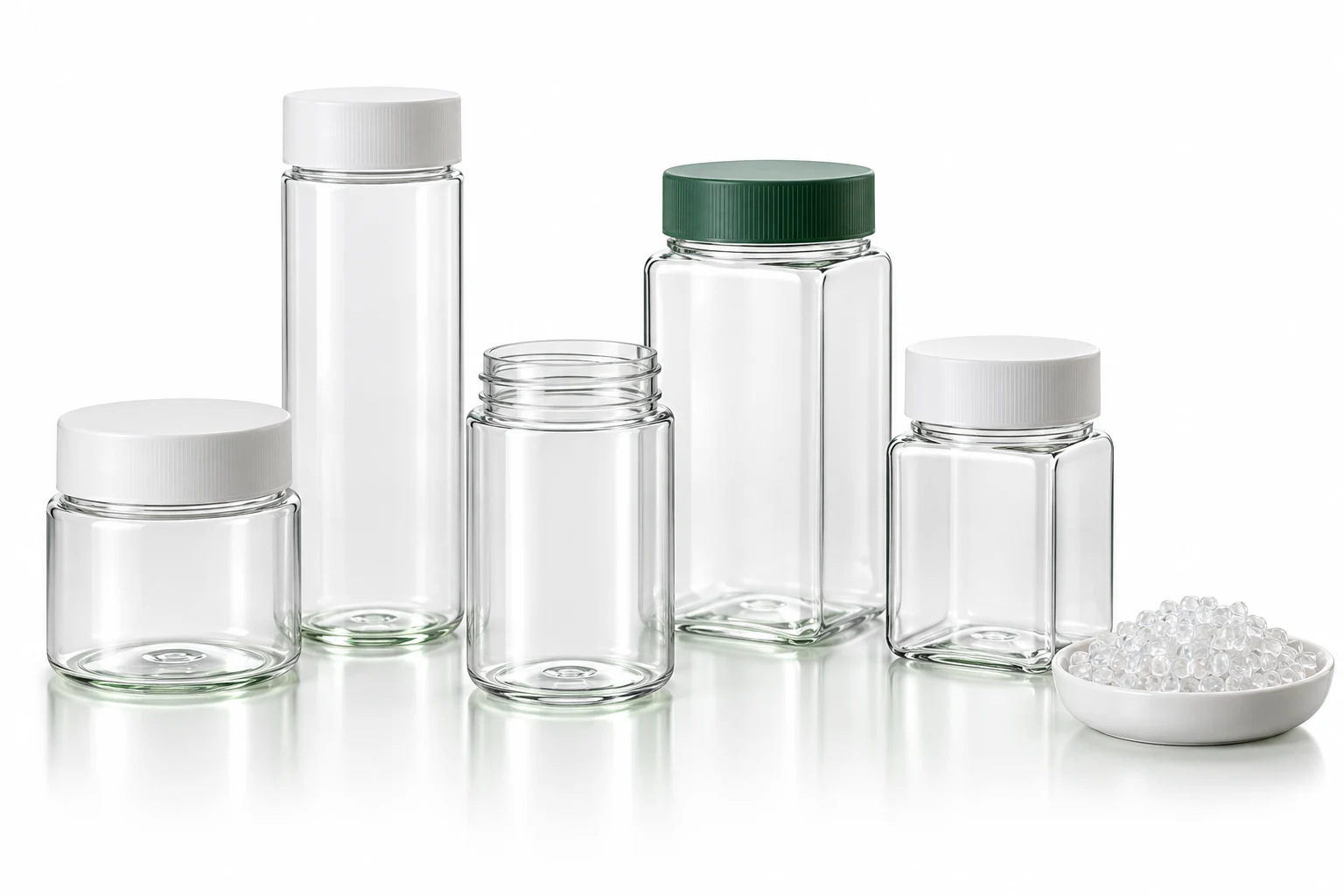
Custom rPET spice packaging requires three separate decisions: the material route, suitability for the intended food contact, and the complete pack’s performance and market requirements. Recycled content does not mean biodegradability. FUKANG helps buyers discuss rPET and PCR packaging options; approve the specific material and container only after reviewing the relevant evidence.
Define what the recycled-material project needs to achieve
For a seasoning brand, a material change has to work beyond the sustainability presentation. The container still needs to fit the filling line, dispense the spice and arrive consistently through repeat orders. A global packaging programme may also need different documentation or pack configurations for different markets.
Start with a defined polymer and recycled-content brief, not “eco plastic.” Discuss the intended recycled proportion, the evidence behind the claim, appearance expectations and the conditions of use. Availability for a particular bottle or jar must be confirmed; an rPET option shown on a website is not approval for every application.
FUKANG’s recycled PET bottle and jar pathway connects the material discussion to actual container development. The goal is a checked specification for your product, rather than a universal environmental claim.
Recycled, recyclable and biodegradable answer different questions
PET identifies a polymer; rPET identifies recycled PET. PCR identifies post-consumer recycled origin and should be paired with a polymer name. APET refers to an amorphous form of PET: its name alone establishes neither recycled content nor biodegradability. The PET, APET, rPET and PCR glossary explains the distinctions.
| Term | Question to ask | What it does not prove |
|---|---|---|
| Recycled content | What proportion and origin are documented? | Food-contact suitability or biodegradability. |
| Recyclability | Can the complete pack fit the relevant recycling system? | That it contains recycled plastic. |
| Biodegradability | Under which conditions and test method? | That it breaks down anywhere in nature. |
| Compostability | Which standard, conditions and collection route apply? | Suitability for ordinary plastic recycling. |
The European Commission distinguishes bio-based origin from biodegradability and compostability, and stresses defined end-of-life conditions. Do not substitute “biodegradable” for “recycled” in a label or purchasing brief. A conventional rPET spice jar must not be described as biodegradable simply because recycled feedstock was used. Read the Commission’s terminology guidance.
Review food-contact suitability independently
Recycled-content evidence and food-contact evidence do different jobs. For EU food-contact projects, the Commission identifies Regulation (EU) No 10/2011 for plastic materials and Regulation (EU) 2022/1616 for recycled plastic materials and articles. The recycling route and intended conditions matter; a resin description alone is insufficient.
Ask which resin supplier and material grade are proposed, what evidence covers the recycling route, and which declarations and test information apply to the finished container. Define the spice, storage time, temperature and other intended conditions. Check the scope of documents, not just the presence of a certificate logo.
The Commission’s framework distinguishes recycling technologies, processes and installations. Do not confuse a bottle manufacturer with the upstream recycler, or assume a recycling-process authorization applies to every jar. Your importer and regulatory team should establish the evidence required for the selected route. See the official recycled-plastic food-contact explanation.
For a practical starting point, use FUKANG’s food-contact rPET buyer checklist alongside your market-specific review.
Treat PPWR as a phased packaging project—not a single badge
The EU Packaging and Packaging Waste Regulation, Regulation (EU) 2025/40, generally applies from 12 August 2026. Measures have different starting dates and conditions. The Commission identifies food-contact PFAS restrictions among the requirements applying from that date, while further circularity measures are phased. It is misleading to describe all PPWR obligations as either already identical or entirely postponed.
Recycled-content and recyclability provisions include later milestones, category distinctions, exceptions and dependencies on secondary legislation. Do not copy a percentage into every spice-bottle specification without checking the packaging classification, calculation rules and applicable date. A commercial recycled-content target and a legal minimum are not automatically the same.
For an EU launch, record who supplies the supporting information, which obligations apply to your role and how the finished pack is assessed. Review the current legal text and implementation guidance with your importer or compliance adviser. This article is a procurement guide, not a certificate of PPWR compliance.
| Checkpoint | Buyer action |
|---|---|
| 12 August 2026 / general application | Identify the requirements already applicable, including relevant food-contact substance restrictions. |
| Later circularity milestones | Check the exact category, exceptions, dates and secondary legislation for recycled content and recyclability. |
| Before approving a material or pack change | Review the complete construction, technical evidence and responsibilities with the EU market team. |
Reference: European Commission’s PPWR application update and Regulation (EU) 2025/40. FUKANG’s PPWR project support sits within its wider recycled-packaging offer.
Evaluate the bottle, closure, seal and decoration together
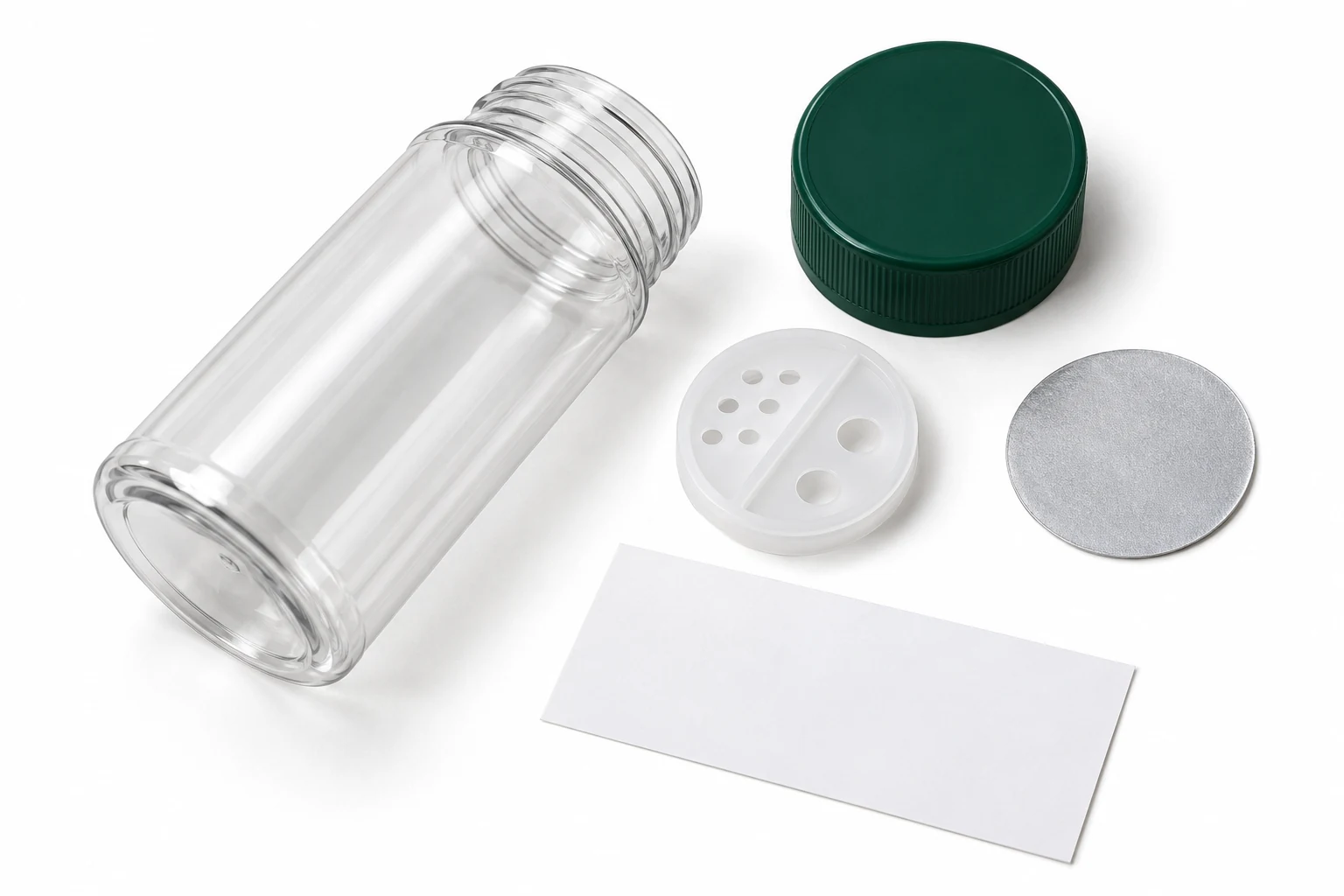
For recycled PET spice jars, assess the assembled packaging rather than an isolated bottle. Cap material, liner, label or sleeve, adhesives, colour and component separation can affect the relevant recycling assessment. A resin choice alone cannot prove that the final pack is recyclable everywhere.
At the same time, check the actual product’s needs. Review bottle dimensions, closure fit, dispensing, appearance and filling behaviour, then define validation and incoming inspection criteria. Compare representative samples rather than assuming two visually similar clear bottles have the same material specification or performance.
A recycled-material change can also affect sourcing, colour consistency and cost. Agree the acceptable appearance range and the evidence required if the material source changes. Ask for a project-specific quotation instead of assuming rPET always carries a fixed cost premium or saving.
Turn the recycled-content goal into a FUKANG project brief
Share the seasoning type, capacity, cap direction, expected order quantities and destination markets. Add the recycled-material goal, appearance limits and documents requested by your customer. The team can then discuss suitable container directions and the information needed for a realistic sample and approval plan.
Kyco is FUKANG’s environmental packaging technology identity. It can frame a material-development conversation, but it should not be treated as a generic regulatory certification or proof of a particular recycled percentage. Confirm the actual material route and evidence for each SKU.
- 01Set the brief
Product, markets and recycled-material goal
- 02Review the route
Resin source, documentation and pack design
- 03Check samples
Appearance, fit and intended-use validation
- 04Approve the pack
Specification, evidence and change control
Build the project around custom packaging development and application-specific review. Global requirements lead the specification; EU PPWR is an additional market layer where relevant. Contact Chester at [email protected] or discuss the brief through FUKANG’s Alibaba store.
Bring your specification into the conversation.
Discuss Your Recycled Spice Packaging ProjectFrequently asked questions
Is rPET spice packaging biodegradable?
No. Recycled PET describes recycled origin, not biodegradability. Do not market an rPET jar as biodegradable solely because it contains recycled material. Any separate biodegradability claim needs defined conditions and appropriate evidence.
Does APET mean recycled or biodegradable PET?
No. APET describes an amorphous form of PET. The term alone does not identify recycled origin, recycled percentage or biodegradability. Specify those attributes separately where relevant.
Can any recycled PET jar be used for food?
No. Review the exact material route, relevant food-contact documentation and intended conditions of use. The destination-market requirements and finished container also need to be considered before approval.
Does PPWR require the same recycled percentage in every spice bottle now?
No. Requirements have phased dates, packaging categories, exceptions and calculation conditions. Determine the rule applicable to the specific pack and market date rather than applying one universal percentage to all spice bottles.
Does a green cap or clear bottle prove recycled content?
No. Appearance cannot verify polymer origin or recycled percentage. Request traceable material information and relevant supporting evidence for the proposed specification.
How do I start a custom rPET spice bottle project with FUKANG?
Send the intended product, bottle and cap requirements, markets, quantities and recycled-material goal. FUKANG can discuss current options and the sample and documentation checks needed for the selected application.
References and scope
- European Commission: PPWR application update
- EUR-Lex: Regulation (EU) 2025/40
- European Commission: recycled plastics for food contact
- European Commission: biodegradable and compostable terminology
Reviewed 30 October 2026. Guidance is for procurement planning; confirm current rules and the specific material, pack and use conditions before approval.